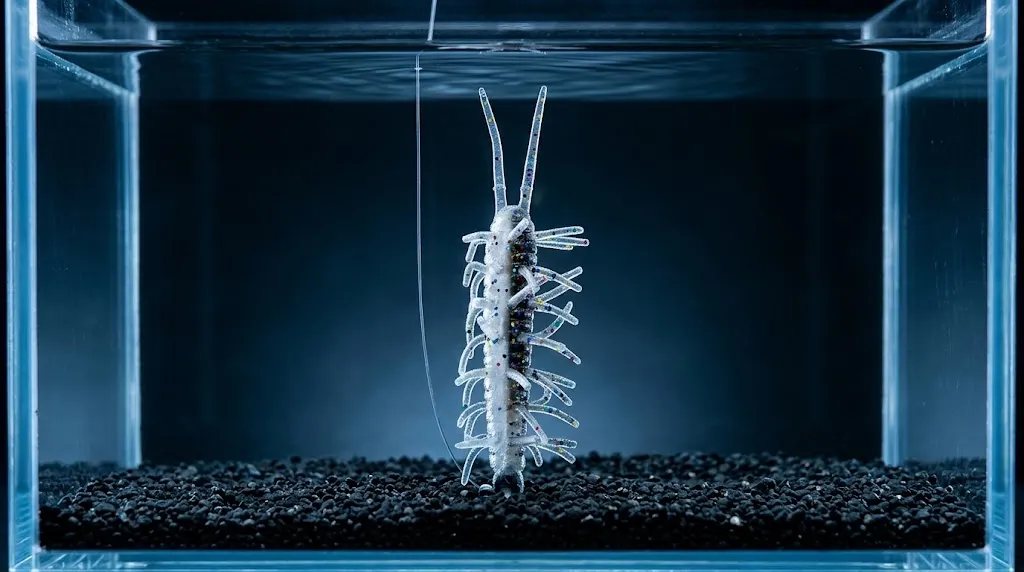
Introduction: The TPE Material Revolution in Modern Soft Plastics
Over the past five years, Thermoplastic Elastomer (TPE) and Thermoplastic Rubber (TPR) have transformed the finesse fishing landscape—most notably across Ned Rigging, dropshotting, and saltwater micro-rockfishing. Compared to conventional plastisol (PVC) lures, TPE compounds offer two immense biological advantages: natural positive buoyancy and extreme tensile elongation (up to 10x original length without snapping).
However, standard TPE lures come with notorious manufacturing and storage hurdles:
- Chemical Plasticizer Migration: Traditional TPE melts and dissolves when stored alongside standard PVC soft plastics or placed in standard tackle boxes.
- Thermal Injection & Cooling Deficiencies: TPE possesses high thermal shrinkage and slow mold-cooling rates, frequently causing sink marks, warpage, and fused micro-appendages.
- Rigging Resistance: High material elasticity makes straight hook insertion difficult for anglers if internal guide channels are omitted.
At Showyee Lure, we apply polymer cross-linking modifications, CNC micro-cooled mold channels, and specialized packaging systems to manufacture tournament-grade buoyant TPE soft baits that resist deformation, float upright on the bottom, and survive toothy predators.
1. Polymer Chemistry: Resolving the "Melting" & Leaching Phenomenon
The core chemical challenge of TPE is oil migration. Standard low-grade TPE relies on heavy mineral oil plasticizers that leach out under ambient heat, reacting aggressively with vinyl-based plastics:
- Stable Cross-Linked Molecular Matrices: We compound medical-grade SEBS (Styrene-Ethylene-Butylene-Styrene) polymers with proprietary molecular locking agents. This matrix locks internal softening oils within the polymer chain, preventing surface sweating and thermal decomposition up to 70°C (158°F).
- PVC-Safe Anti-Migration Coatings: Our surface curing process creates a micro-barrier layer that significantly mitigates chemical reactions when in incidental contact with other tackle.
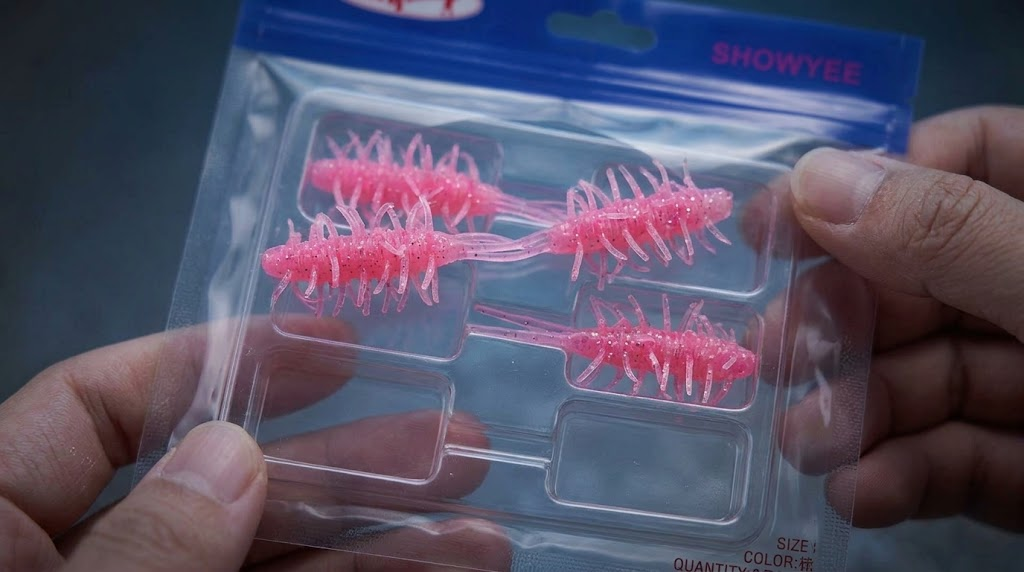
- Natural Stand-Up Tail Buoyancy: Unloaded TPE has a natural specific gravity below water (< 0.92 g/cm³). When paired with flat-bottom Ned jig heads, the bait stands at a perpendicular 90-degree defensive craw/baitfish posture on bottom pauses, triggering curious strikes.
2. High-Precision Tooling: Micro-Cavity Cooling & Gate Optimization
TPE behaves very differently in the mold compared to liquid plastisol:
- Rapid Conformal Cooling Channels: Because molten TPE retains heat longer than PVC, our CNC aluminum and P20 steel molds feature conformal water-cooling loops. This slashes cycle times while eliminating internal thermal voids and shrinkage dents on thicker body segments.
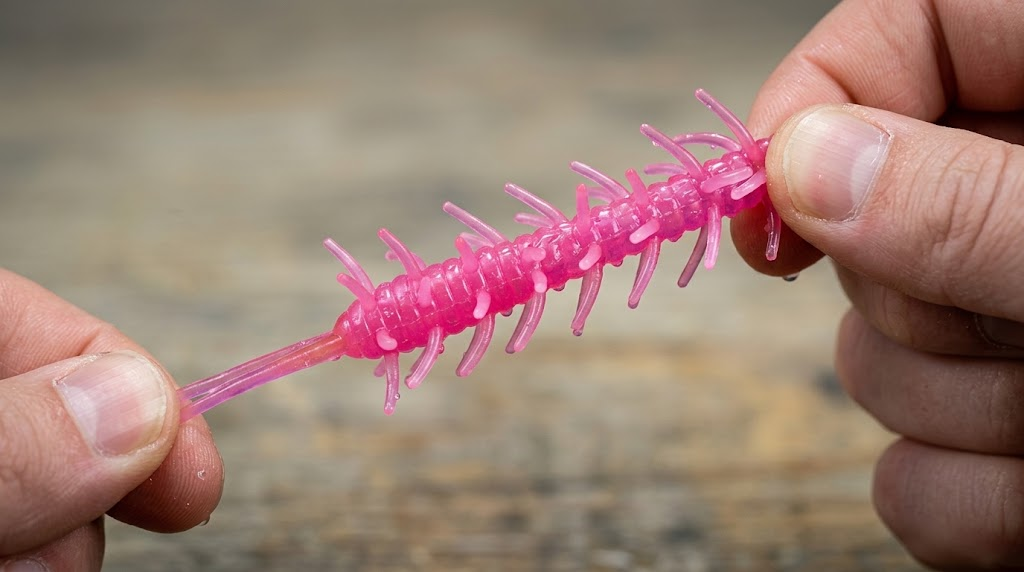
- Zero-Flash Pin-Point Injection Gates: High-viscosity elastomers tend to leave stringy sprues. We use pneumatic needle shut-off nozzles and micro-gates (0.8mm) to ensure clean, flash-free edges across delicate tentacles, ribs, and paddle tails.
- Pre-Molded Hook Alignment Grooves: To solve the difficulty of rigging tough elastomer plastics, we integrate recessed hook slots and dorsal alignment marks directly into the mold cavity, ensuring centered, weedless rigging every time.
3. Formulation & Application Matrix: Shore Hardness vs. Tactical Profile
Different finesse techniques demand precise calibrations of durometer softness, salt loading, and buoyancy:
| Tactical Application | Polymer Base | Calibrated Hardness | Buoyancy Profile | Engineering Focus |
|---|---|---|---|---|
| Finesse Ned Worm (2.75" – 3.5") | High-Grade SEBS TPE | Shore 00-30 to 00-40 | High Floating (90° Stand-Up) | Ultra-supple quivering with zero tail drag on the pause |
| Tough-Bite Creature / Craw (3.0") | Reinforced TPR Elastomer | Shore A 5 to A 10 | Positive Buoyant Claws | Floating claws mimic defensive crawfish; survives 20+ fish strikes |
| Micro BFS Pin-Tail (1.8" – 2.5") | Micro-Foamed Ultra-TPE | Shore 00-15 (Super Soft) | Neutral-to-Floating | Tail flutters in minimal current without tearing on hook shank |
TPE Manufacturing Standards Comparison
| Material & Tooling Metric | Standard OEM Supplier | Showyee Lure Facility |
|---|---|---|
| Tensile Stretch Limit | 3x – 4x stretch before tearing | 10x extreme elongation with instant elastic recovery |
| Oil Sweating & Leaching | Greasy residue; melts inside standard boxes | Stable SEBS formulation with zero surface sweating |
| Appendage Mold Filling | High rejection rate; fused fine legs | Vacuum-assisted micro-gating for clean independent legs |
| Packaging Protection | Bulk bagged (leads to permanent bending) | Custom rigid PET clamshell trays preserving shape |
Frequently Asked Questions (FAQ)
A: Yes. We compound heat-stable shrimp, squid, and baitfish amino-acid attractants directly into the elastomer melt. We also suspend non-bleeding metallic cosmetic glitter evenly throughout translucent, neon, and two-tone laminated body profiles.
A: TPE lures must never be squeezed in bulk bags. We supply custom thermoformed rigid PET blister trays that hold each lure in a dedicated slot, preventing deformation and oil transfer during international freight and retail display.
A: Because TPE has different shrinkage rates (1.5%–2.5%) and thermal properties compared to PVC plastisol, existing PVC molds often require runner and gate modifications. Our engineering team provides a full CAD analysis to assess mold adaptation or build dedicated high-yield TPE tooling.
Build Your Signature TPE Soft Bait Line with Showyee Lure
Partner with an OEM manufacturer experienced in advanced elastomer compounding, conformal mold cooling, and zero-migration material science.
Request Buoyant TPE Sample Packs Submit 3D CAD for TPE Formulation Review