Custom Fishing Lure Manufacturing: From Concept to Mass Production
Introduction
In today's competitive fishing tackle market, successfully launching a fishing lure requires far more than just a great idea. It demands precise hydrodynamic design, premium materials, flawless finishing, and reliable mass-production capabilities.
Whether you're an established tackle brand looking to expand your product line or an entrepreneur building a fishing lure brand from scratch, understanding the manufacturing process inside and out is the key to controlling costs and ensuring top-tier quality.
As a professional OEM/ODM fishing lure manufacturer, we've broken down the six core stages of transforming a fishing lure from concept to mass production.
Why Partner with an R&D-Focused Factory?
Before diving into the process, it's critical to understand the difference between working with an engineering-focused factory versus a traditional trading company or basic assembly line:
| Comparison | Traditional OEM Supplier | Our R&D Manufacturing Factory |
|---|---|---|
| Mold Risk | Direct steel mold production, high risk, costly modifications. | 3D-printed functional prototypes + pool testing before mold production. |
| Paint Quality | Standard spray coating, prone to chipping, limited detail. | HD laser, holographic, UV finishes with rigorous abrasion testing. |
| Quality Control | Visual inspection only, high leak rate, unbalanced action. | 100% pressure leak testing + multi-action pool sampling. |
| Engineering Support | Build to print, no optimization advice. | In-house engineering team providing DFM (Design for Manufacturability) support. |
Step 1: Concept & 3D Engineering Design
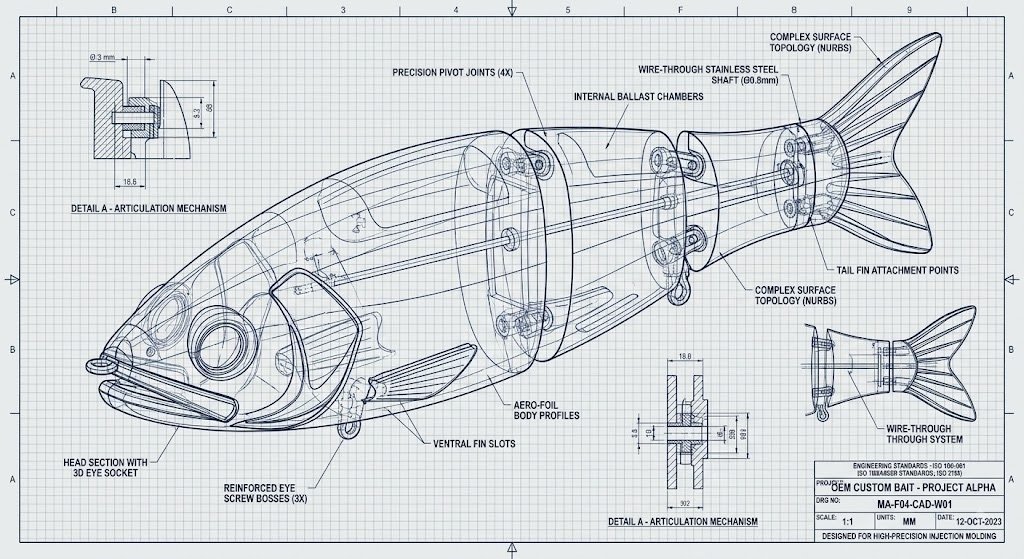
Every high-performance fishing lure starts with a design. Whether you provide a rough sketch, 2D drawings, or a reference sample, our engineering team can transform your vision into a precise 3D CAD model.
At this stage, our core focus is on Design for Manufacturability (DFM) and hydrodynamic balance:
- Lure Body Geometry: Shaping the lure's geometry to produce the desired action — wobble, roll, glide, or dart.
- Weight & Balance: Designing internal cavities for fixed or moving hard bait weight systems (tungsten, steel balls, or magnetic weight transfer systems).
- Internal Structure: Designing internal reinforcing ribs and screw structures (where needed) to ensure structural integrity under the impact of big fish.
Step 2: Rapid Prototyping & Custom Painted Sample Production
- Multi-cavity mass production molds: High cost, high risk.
- 3D-printed custom painted functional prototypes: An indispensable first step.
- Real pool testing: Adjusting key variables.
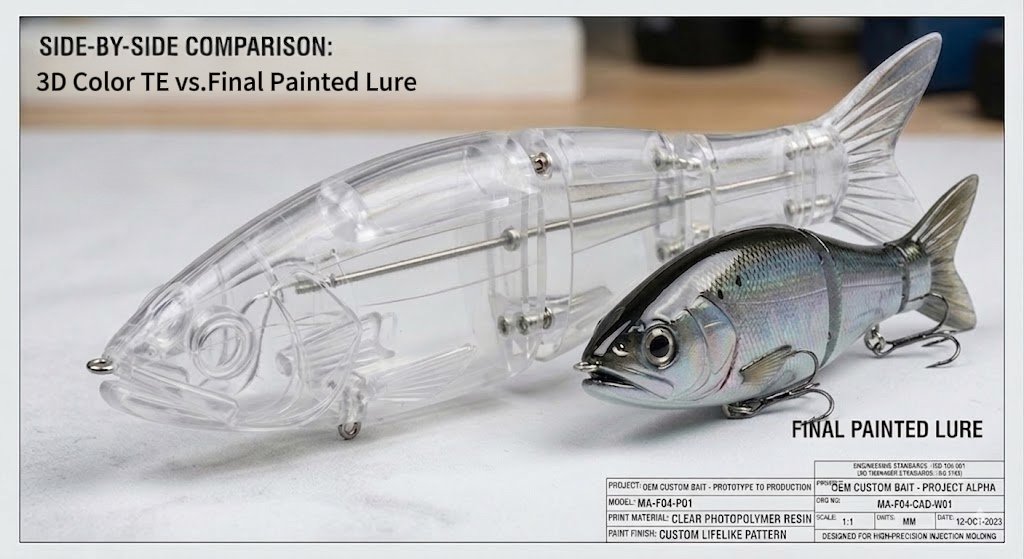
Paint Simulation
- Multiple layers of primer base coat.
- Precision hand sanding.
- Smooth surface, meeting mass production paint standards.
Buoyancy & Balance Calibration
- Internal weight. Recalculated.
- 3D resin density compensation, simulating final ABS buoyancy.
- Perfectly balanced, center of gravity precisely tuned.
Dynamic Action Verification
- Lure lip angle. Pool testing.
- Action stability. Casting balance. Depth control.
Sample approved. Action verified. Paint finish confirmed.
Mold production authorized. Green light — approved.
Step 3: Precision Mold Development & Material Selection
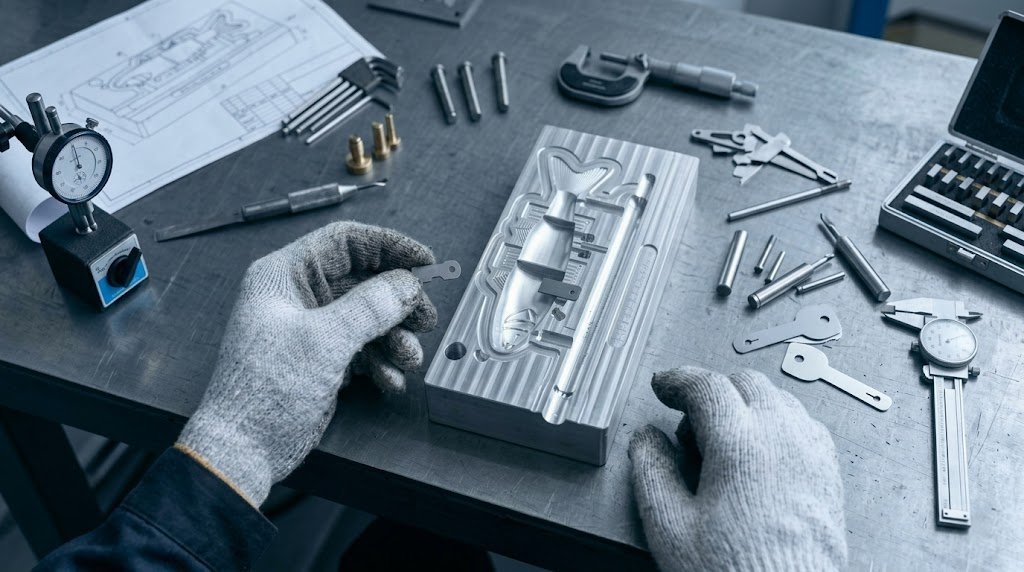
Mold precision directly determines product consistency. We use high-precision CNC machining to produce aluminum or steel molds with tolerances controlled at the millimeter level.
Based on your target species and price positioning, we'll help you select the optimal raw materials:
- Hard Baits: Premium ABS or polycarbonate resin, providing excellent impact resistance and crystal-clear transparency.
- Soft Baits: Eco-friendly PVC/TPE composite materials, customizable for firmness and tear resistance, and combined with our custom soft bait injection molding service, can incorporate scent and salt.
- Metal Baits/Jigs: Lead-free alloys, zinc, or tungsten, optimized for sink rate and compact profile.
Step 4: Advanced Painting & Surface Finishing
The visual appeal of a fishing lure is what attracts anglers — and of course, fish. Our custom lure painting department offers a range of industry-grade surface finishing processes:
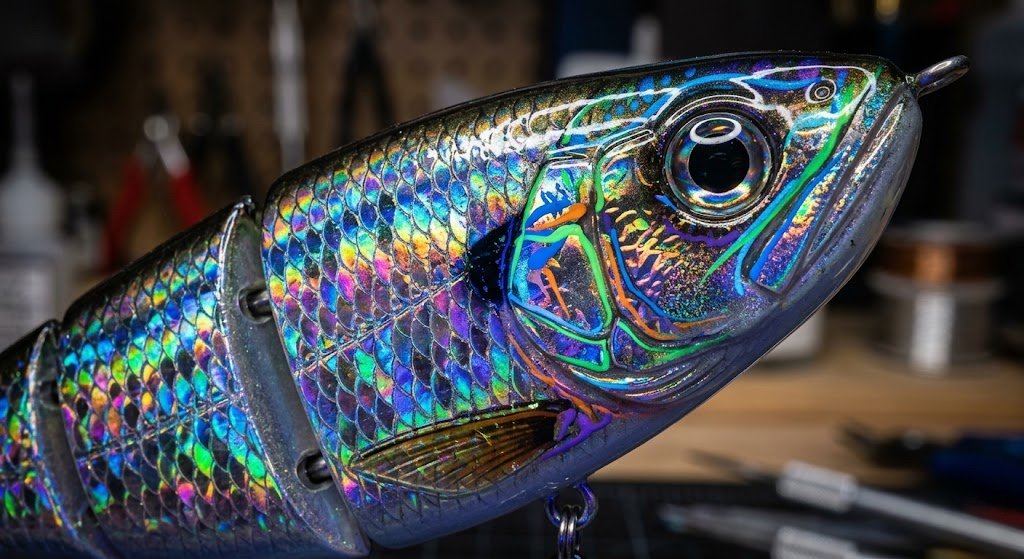
- HD Foil Stamping & Holographic Printing: Using ultra-high reflective foil layers to replicate the scale texture of natural baitfish.
- UV & Glow-in-the-Dark Coatings: Enhancing visibility in murky water or low-light deep-sea environments.
- Hand-Painted Realistic Patterns: Multi-layer hand-painted designs with 3D realistic fish eye effects, sealed with durable topcoat.
- Durability Testing: Every finished lure undergoes abrasion and UV exposure testing to prevent chipping or fading after repeated strikes.
Step 5: Hardware Assembly & Hook Rigging
Without reliable hardware, even the best lure body is useless. In the final assembly stage, we configure hardware according to your brand specifications:
- Hooks & Split Rings: Premium treble hooks (BKK, Owner, or custom high-carbon steel hooks) and heavy-duty stainless steel split rings.
- Through-Wire Construction: One-piece stainless steel wire frame, designed for saltwater/big game applications, capable of withstanding extreme pressure.
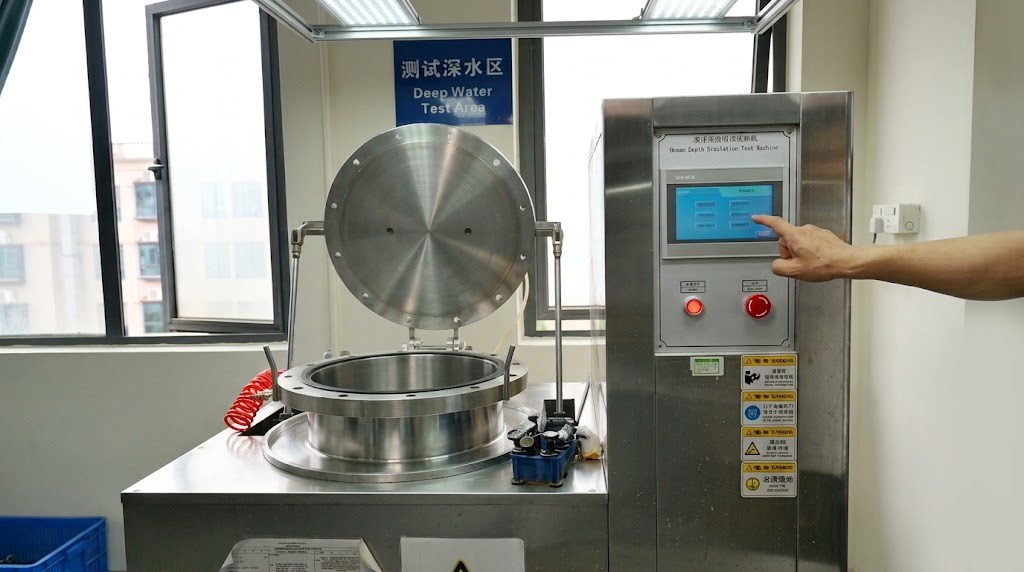
- Sealing & Leak Testing: 100% pressure testing on hard baits to check for leaks and prevent water intrusion.
Step 6: Quality Control & Custom Packaging
Before your order leaves the factory, every batch undergoes a rigorous AQL (Acceptable Quality Level) inspection process:
- Visual & Aesthetic Inspection: Color matching, coating uniformity, zero surface defects.
- Action Sampling: Random pool testing to ensure 100% action consistency across batches.
- Packaging Integration: Custom blister packs, backing cards, eco-friendly boxes, or retail barcode labels to meet your retail channel requirements.
Frequently Asked Questions (FAQ)
Q1: What is the typical Minimum Order Quantity (MOQ) for custom lure production?
A: For custom paint on existing standard molds, the MOQ is typically 1,000 pieces per color. For entirely new custom mold development (OEM), the MOQ can be optimized based on lure size and material.
Q2: How do you protect my proprietary lure designs and intellectual property (IP)?
A: We understand that intellectual property is the lifeline of your brand. We protect your designs through a three-layer protection agreement:
- Mutual NDA: Before receiving any 3D files or samples, we sign a legally binding Non-Disclosure Agreement.
- Mold Ownership & Exclusive Use: Your custom molds are 100% owned by you and assigned a unique serial number, securely stored in our physical warehouse. They are never used for other clients or sold privately.
- Restricted Internal Data Control: CAD files are accessible only to designated lead project engineers.
Q3: How long does sampling and mass production typically take for custom lures?
A: Typically, 3D functional prototypes take 7 to 10 days. After prototype approval and mold production, mass production usually takes 30 to 45 days, depending on order complexity.
Take the First Step Into the World of Your Lure Brand
Whether you already have production-ready 3D CAD drawings or just a concept sketch waiting to be refined, our engineering team is ready to support your brand's growth.
Choose how you'd like to start:
- Already have a design? Send us your files for a free DFM (Design for Manufacturability) feasibility assessment.
- Want to see samples first? Request our OEM/ODM product catalog and sample kit to experience our paint finishes, weight systems, and manufacturing quality firsthand.